Flavour science · Coffee
The Chemistry Behind the Decoction
By Sandhya Ravichandran · 6 min read
In today’s fast-moving world, we sometimes overlook the small things that once made mornings feel slower and more comforting.
For me, one such memory is the strong aroma of freshly prepared coffee decoction, the familiar clink of the dabara-tumbler set, M. S. Subbulakshmi’s Suprabhatam playing in the background, and my father reading the newspaper.
Behind that seemingly simple cup of South Indian filter coffee, however, there is quite a bit of chemistry happening.
What is a coffee decoction?
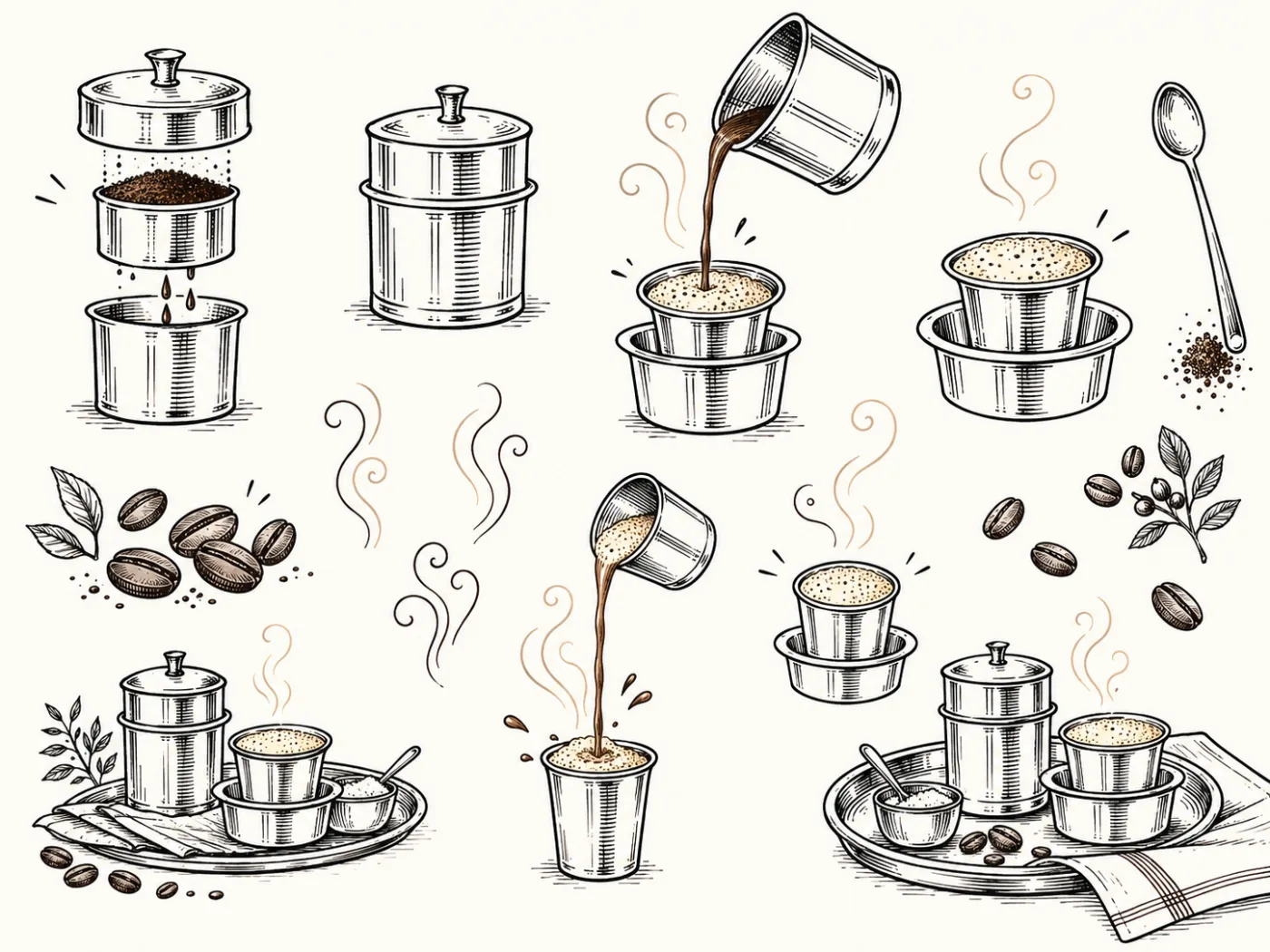
South Indian filter coffee is traditionally prepared using gravity percolation.
Ground coffee is placed in the upper chamber of a metal filter and hot water is poured over it. Unlike espresso, no external pressure is applied. Water slowly moves through the bed of coffee grounds under gravity and collects in the lower chamber.
The concentrated liquid that collects below is what we call the decoction.
But it is more than simply coffee powder mixed with water.
It is an extract — a mixture of water-soluble compounds that have moved from the roasted coffee grounds into the brewing water.
So what makes a good decoction?
A good decoction is not necessarily the darkest or the strongest.
It is about balance.
Aroma, acidity, bitterness, concentration and body all need to work together — especially because the decoction is usually only the first step.
Once hot milk and, depending on preference, sugar are added, the sensory experience changes again.
Milk can soften bitterness, contribute sweetness and creaminess, and alter the way aroma compounds are perceived.
So the familiar cup of South Indian filter coffee is actually the result of several transformations:
- Roasting
- Grinding
- Extraction
- Decoction
- Milk
- The final cup
What appears to be a simple morning ritual is, in reality, a small flavour experiment happening every day in our kitchens.
The chemistry begins before brewing
A lot of what we recognise as “coffee flavour” is actually created before water ever touches the coffee.
Green coffee beans do not smell like the coffee we drink.
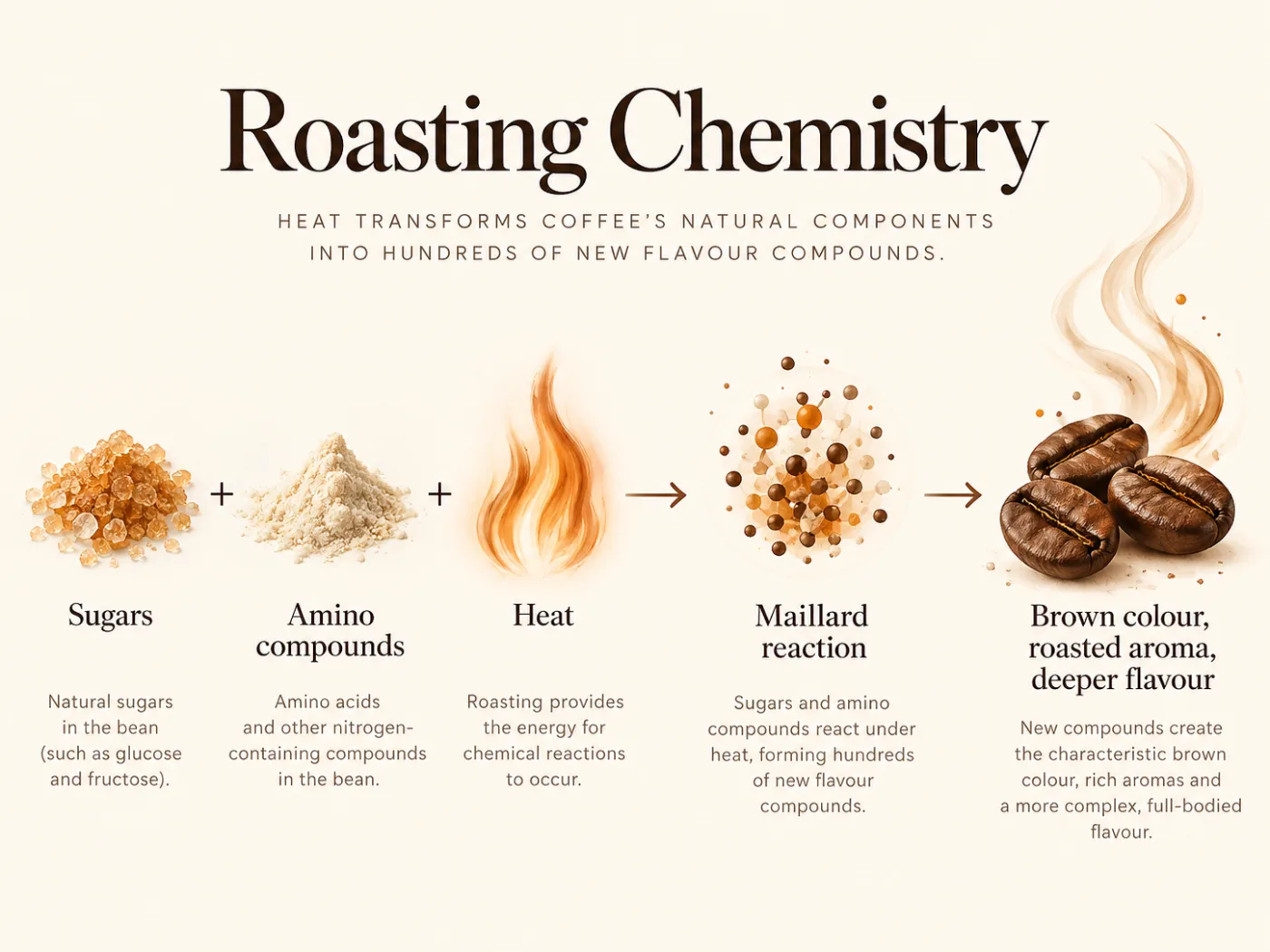
During roasting, heat causes extensive chemical transformations. One important group of reactions is the Maillard reaction, where sugars and amino compounds react to generate many new aroma and flavour molecules.
Roasting also causes other thermal reactions that affect the bean's colour, bitterness, acidity and aroma.
This is why roasting transforms a relatively mild-smelling green bean into something with the familiar roasted, nutty, caramel-like and sometimes smoky notes we associate with coffee.
Where does chicory come in?
Many traditional South Indian filter-coffee blends contain coffee and roasted chicory.
Chicory comes from the root of the chicory plant. Once roasted and ground, it contributes its own dark colour, roasted character, earthy notes and bitterness.
It can also change the perceived body of the decoction, giving the finished coffee a fuller character.
A commonly encountered blend is around 80% coffee and 20% chicory, although the ratio varies considerably between brands and individual preferences.
The coffee-to-chicory ratio therefore becomes another variable affecting the character of the final cup.
Four things that can change your decoction
Even if you use exactly the same coffee blend, your decoction can taste different depending on how you brew it.