Citrus peel in tamarind · Winter special
Orange Peel Pachadiஆரஞ்சு தோல் பச்சடி
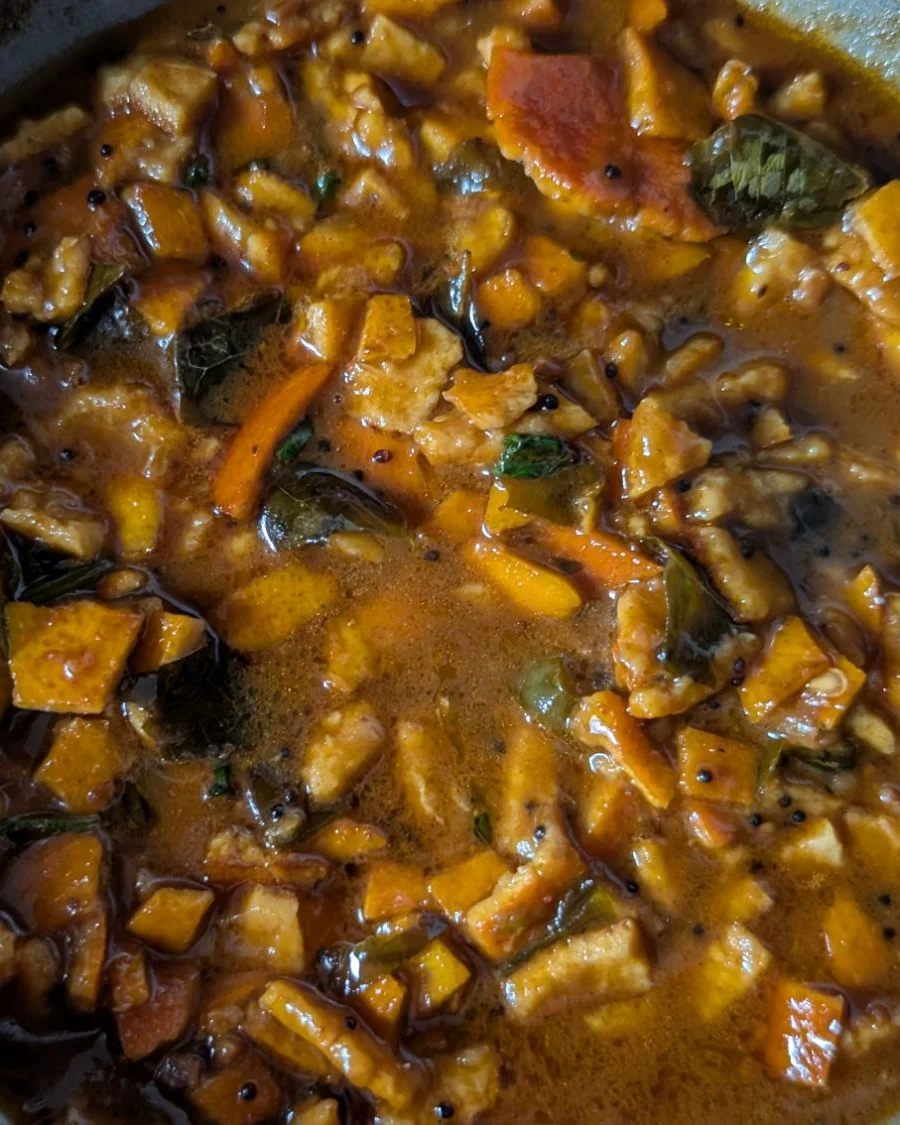
Orange Thol Pachadi is a seasonal dish that I make quite often during the winter months in Germany. Oranges are at their best through the winter season, and this recipe is a lovely way to make use of them. For this version, I have used clementines.
The preparation is quite similar to making a vathakuzhambu. However, the addition of jaggery towards the end brings a gentle sweetness that balances the flavours. And with sesame oil forming the base, this is one of those dishes where you might not want to skip or substitute the traditional ingredients!
This pachadi also tastes good cold, keeps for a while, and tastes best with curd rice.
Serves
- 4
Preparation
- 15 minutes
Cooking
- 20 to 25 minutes
Method
- 01
Wash the clementines thoroughly. Remove the peel and chop it finely. If the white pith is particularly thick, scrape away some of it. Blanch the chopped peel in boiling water for 3 to 4 minutes, then drain.
- 02
Soak the tamarind in the warm water and squeeze out the extract.
- 03
Heat the gingelly oil in a kadai. Add the mustard seeds and let them splutter. Add the fenugreek seeds, followed by the green chillies, curry leaves and asafoetida.
- 04
Add the chopped clementine peel and sauté for a few minutes until it softens slightly.
- 05
Add the turmeric powder and sambar podi. Stir briefly over low heat so the spice powder does not burn.
- 06
Pour in the tamarind extract and add salt. Bring to a gentle boil, then simmer for 12 to 15 minutes, or until the peel is tender and the kuzhambu begins to thicken.
- 07
Add the jaggery and simmer for another 2 to 3 minutes. Adjust the consistency with a little water if needed. The finished kuzhambu should be glossy and thick, similar to vathakuzhambu.
- 08
Allow it to rest for a few minutes before serving. The flavours deepen as it sits.
Kitchen tips
- Clementine peel has a natural bitterness, so adjust the jaggery to balance the tamarind and spice.
- For recipes using citrus peel, choose fruit explicitly labelled as suitable for eating with the peel, and check any post-harvest treatment information. Wash thoroughly; washing alone does not guarantee that treated peel is suitable for cooking.