← All recipes · Festive Special
Rice and gram flour snack · Diwali
Ribbon Pakodaரிப்பன் பக்கோடா
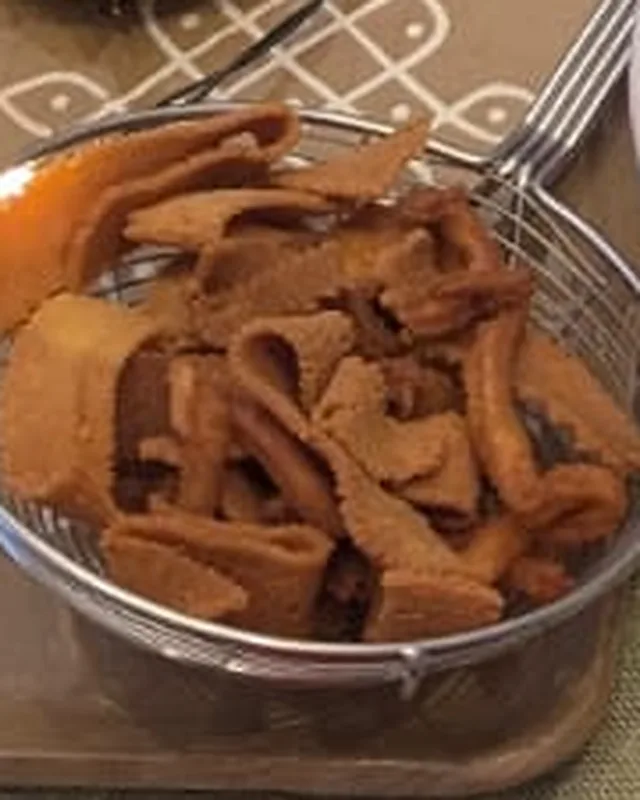
Now we come to the savoury side of the festive table, because no South Indian celebration ever feels complete without it.
I have surprisingly little experience using the murukku soppu, the traditional press used to shape many South Indian snacks. Yet it is a piece of equipment that seems to exist in almost every household, often in multiple sizes and designs, passed down through generations along with the recipes themselves.
Of all the festive snacks, Ribbon Pakoda always felt like the most approachable one, at least to me. Made from a simple combination of rice flour, gram flour and spices, it transforms into something crisp, light and endlessly snackable. It is one of those preparations that survives long after the festival is over, carefully stored in large tins and containers to be enjoyed over the following days and weeks.
For many children, it eventually finds its way into school snack boxes. I was never particularly fond of oily foods growing up, so I was usually given a modest portion in the evenings after school. Yet somehow, Ribbon Pakoda was the one festive snack I always reached for. Perhaps it was the crisp texture, or perhaps it was simply the comfort of knowing there was always some left in the container long after Diwali had passed.
Allow the ribbon pakoda to cool completely before storing in an airtight container. It keeps well for 2 to 3 weeks and, in many households, continues to disappear steadily long after the festival has ended.
Makes
- About 500 to 600 g
Preparation
- 15 minutes
Cooking
- 30 minutes
Method
- 01
In a large bowl, combine the rice flour, gram flour, chilli powder, asafoetida, salt and the sesame seeds, if using.
- 02
Add the hot oil and mix well using your fingertips.
- 03
Add water gradually and knead into a smooth, soft dough.
- 04
Fit the murukku press (murukku soppu) with the ribbon pakoda plate and fill it with a portion of the dough.
- 05
Heat the oil for frying over medium heat. Press the dough directly into the hot oil in circular motions.
- 06
Fry until the bubbling almost subsides and the ribbon pakoda turns light golden. Flip and cook the other side briefly.
- 07
Remove and drain on a paper towel. Repeat with the remaining dough.
Kitchen tips
- The dough should be softer than chapati dough, but firm enough to be pressed through a murukku press.
- Ribbon Pakoda is a good example of how texture contributes to flavour perception. Rice flour provides crispness and brittleness, while gram flour contributes flavour and structure. The characteristic ribbon shape increases surface area, allowing moisture to escape efficiently during frying and creating the light, crisp texture that makes it so satisfying.
- Besan is traditionally made from chana dal (split Bengal gram). Although it is often grouped with chickpea flours, it has a richer flavour and contributes to the characteristic taste and texture of South Indian snacks such as Ribbon Pakoda.
- Sometimes what we describe as flavour is not only taste or aroma. It is also the sound of the first bite and the texture that follows.