Flavour science · Whole spices
When Spices Wake Up
By Sandhya Ravichandran · 5 min read
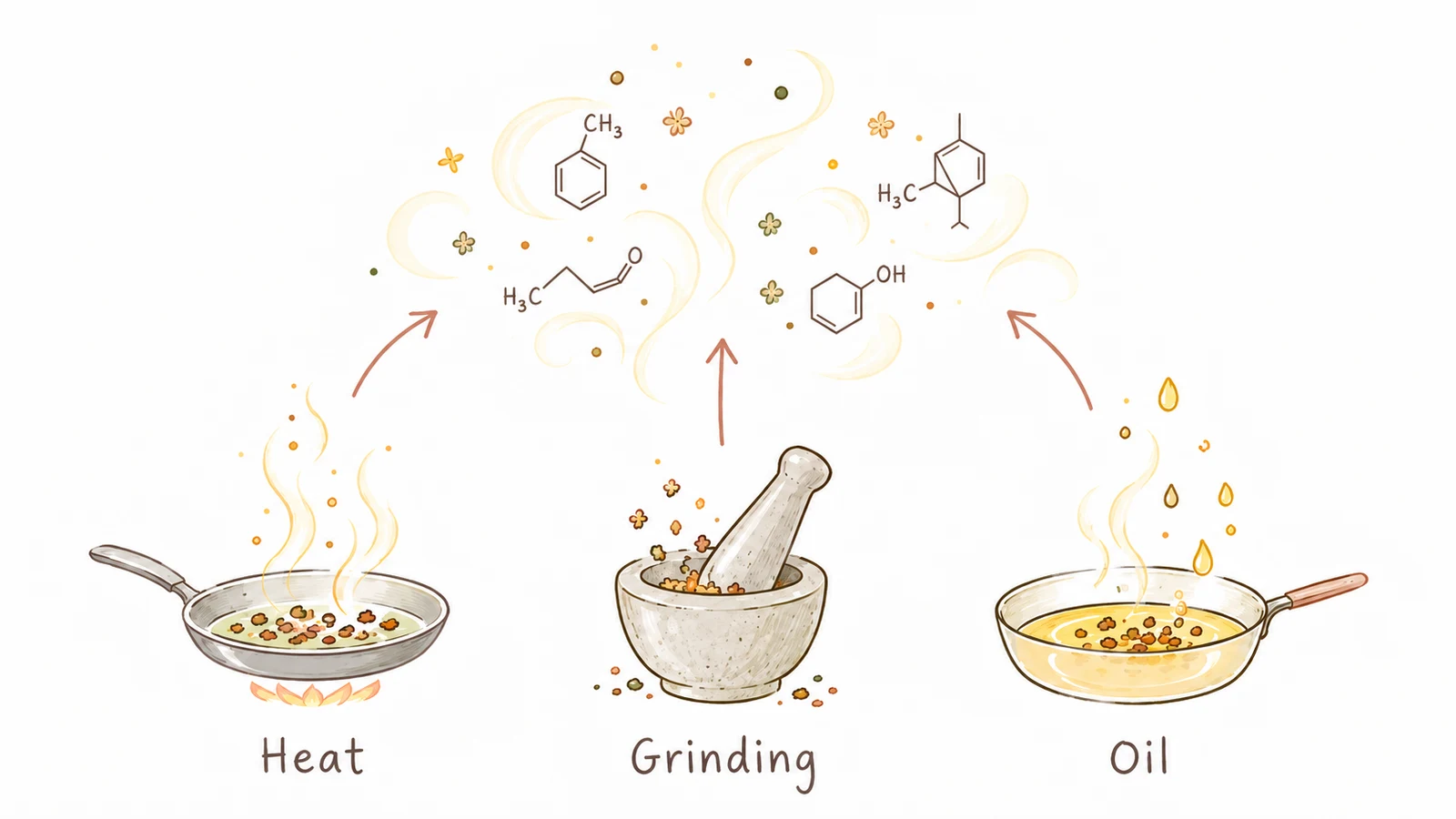
Whole spices may look quiet sitting inside a box, but the moment we crush them, roast them or add them to hot oil, they begin to change.
The aroma is already there — but we have to release it
Many spices contain volatile aroma compounds stored within their plant tissues and essential oils. When a spice is whole, these compounds are relatively protected.
Once we crush or grind it, we break open those structures and expose a much larger surface area. Aroma molecules can then escape much more easily into the air — which is why freshly ground spices often smell so much stronger than whole ones.
It is also why pre-ground spices can slowly lose their intensity with time. Once the spice has been broken open, those volatile compounds have more opportunity to evaporate or change during storage.
This is one of the things I find most fascinating about spices. The flavour is not only in the ingredient itself — it is also in what we do to it.
A whole coriander seed, freshly crushed coriander and roasted coriander powder can all come from the same spice, yet smell and taste completely different.
Each spice has its own characteristic chemistry, which is why the same technique can produce very different results.
Different spices, different chemistry
Black pepper — pungency and aroma
Pepper also contains volatile aroma compounds that give freshly crushed pepper its woody, citrusy and warm character.
That is why freshly cracked pepper can smell so much more vibrant than finely ground pepper that has been sitting in a jar for months.
Fennel seeds — naturally sweet and aromatic
Fennel has a very distinctive sweet, almost liquorice-like aroma.
When fennel is lightly roasted or crushed, that aroma becomes much more noticeable because more of the volatile compounds are released.
This is also why fennel can completely change the personality of a spice mix, even when used in a relatively small quantity.
Coriander seeds — citrus hiding inside a seed
Whole coriander seeds have a warm, slightly citrusy character.
Roasting coriander seeds can make their aroma warmer and nuttier, while crushing them releases the fresher aromatic compounds more quickly.
This makes coriander especially interesting because the same seed can bring both brightness and warmth depending on how it is treated.
Cinnamon — warm, woody and sweet
When a cinnamon stick is simmered slowly in a dish, its aroma is released gradually.
Ground cinnamon behaves very differently because so much more of the spice is exposed at once.
This is why a whole cinnamon stick can quietly perfume a dish, while powdered cinnamon can become much more dominant.
Cloves — small spice, powerful aroma
This is one of those spices where a tiny amount can influence the whole dish.
When heated, cloves release their aroma very quickly, which is why they are usually used with some restraint.
Too many cloves — or too much heat — can easily overpower the rest of the spice blend.
Star anise — similar aroma, different spice
Although similar to fennel, the overall aroma profile is not identical because each spice contains many other compounds as well.
That is an important part of flavour science: one molecule may be very characteristic of a spice, but the flavour we actually experience comes from a mixture of many compounds, not just one.
Black cardamom — smoky, woody and bold
Black cardamom has a much deeper and smokier profile than green cardamom.
Its aroma comes from a complex mixture of volatile compounds, along with other terpenes and smoky notes formed during traditional drying.
When lightly crushed and cooked, it releases a warm, earthy aroma that works especially well in savoury dishes.
Poppy seeds — more about nuttiness than perfume
Poppy seeds behave a little differently from spices such as cloves or cinnamon. They contain a relatively high amount of oil.
When roasted, they develop a deeper, nuttier flavour and a more noticeable toasted character.
They can also contribute body and texture when ground into a paste, which is why their role in cooking can be as much about mouthfeel and richness as aroma.
“So what makes the difference — heat, grinding, oil, or the way we use the spice?”
One can either dry roast a spice or grind it or even use it as a whole. It depends on the requirement of the dish and the final taste you want to achieve.
The same principle appears in tempering too: the oil is not only cooking the spices — it is also helping transport flavour.