Issue 5 · Festive edition
Deepavali in My Home: Memories, Rituals and Food
By Sandhya Ravichandran · 4 min read
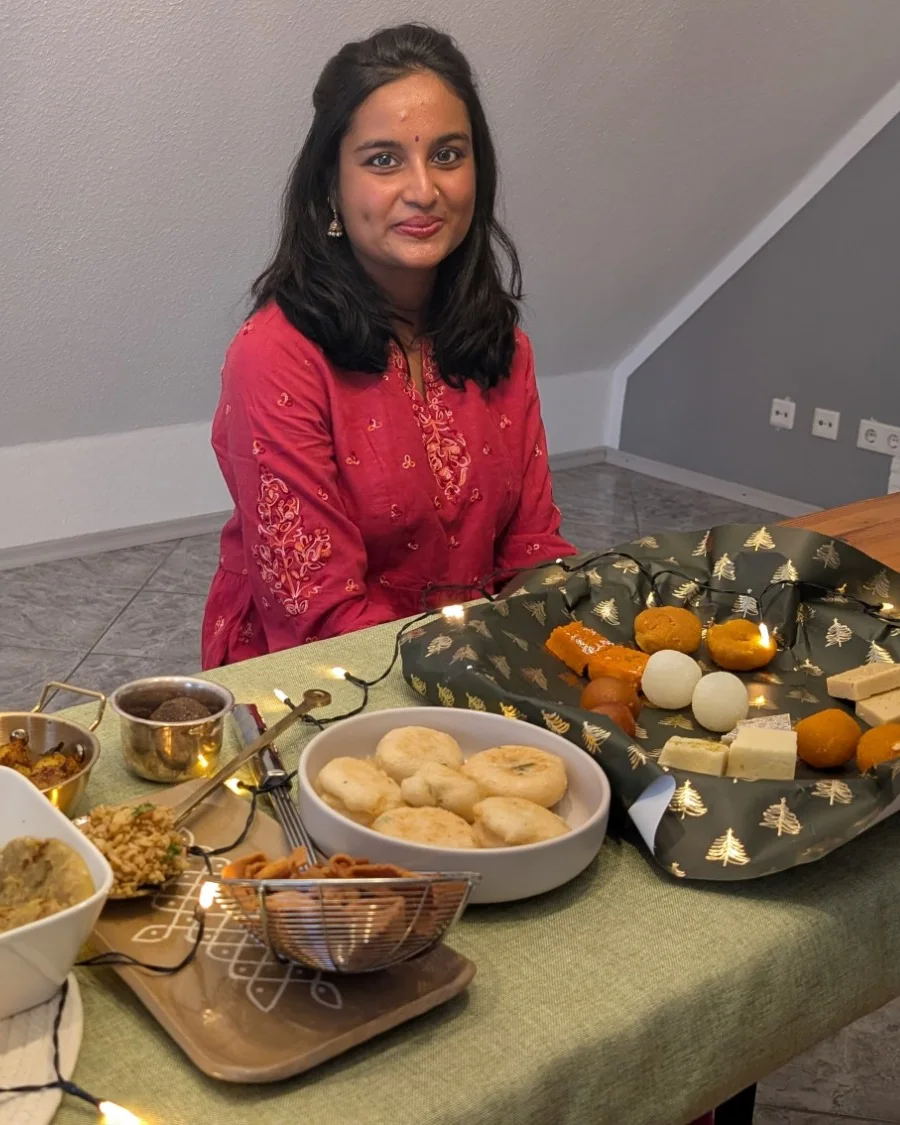
The moment I hear Deepavali, my mind goes straight to waking up early, long before sunrise. It could be the only day of the year when I am genuinely excited to wake up that early!
In our household, the celebrations begin the night before. We lay out our new clothes, along with the sweets and snacks prepared by Amma, in front of the shrine. It is a small ritual, but one that builds so much excitement for the morning ahead.
The next morning, the eldest person in the family applies a little sesame oil to our hair. We then take our traditional oil bath with hot water. This ritual is associated with the celebration of Lord Krishna's victory over Narakasura. Once the bath is done, we put on our new clothes and get ready for the festivities — which, of course, include bursting firecrackers!
Some of my fondest childhood memories of Deepavali are from visits to my grandparents' house. The whole family would come together, exchange homemade sweets and snacks, and spend the evening after sunset bursting firecrackers. There was so much excitement, laughter and togetherness. It remains one of my happiest memories, and I would trade anything to experience those days again.
And how can we talk about Deepavali without talking about the food?
Amma would prepare an elaborate spread of sweets and savouries for the occasion. Once we were done with the excitement of the morning firecrackers, we would look forward to her freshly made vellai appam — a delicious fried snack that was always a favourite.
Then came the mixture. As the name suggests, it is a combination of different savoury snacks, often made using gram flour and rice flour. Every handful brought together different shapes, textures and crunch. It was almost impossible to stop at just one!
And, of course, there was the grand South Indian festive meal. After all that eating, we would finish with a small serving of Deepavali legiyam — a traditional herbal preparation made in many South Indian homes and believed to help with digestion after the festive feast.
This year's table
This Deepavali, far from Amma's kitchen, I hosted a potluck at home: from noon onwards, everyone bringing a dish to share. Everything on this table was cooked for it, from the vellai appam and ribbon pakoda of my childhood mornings to the legiyam that closes the meal.
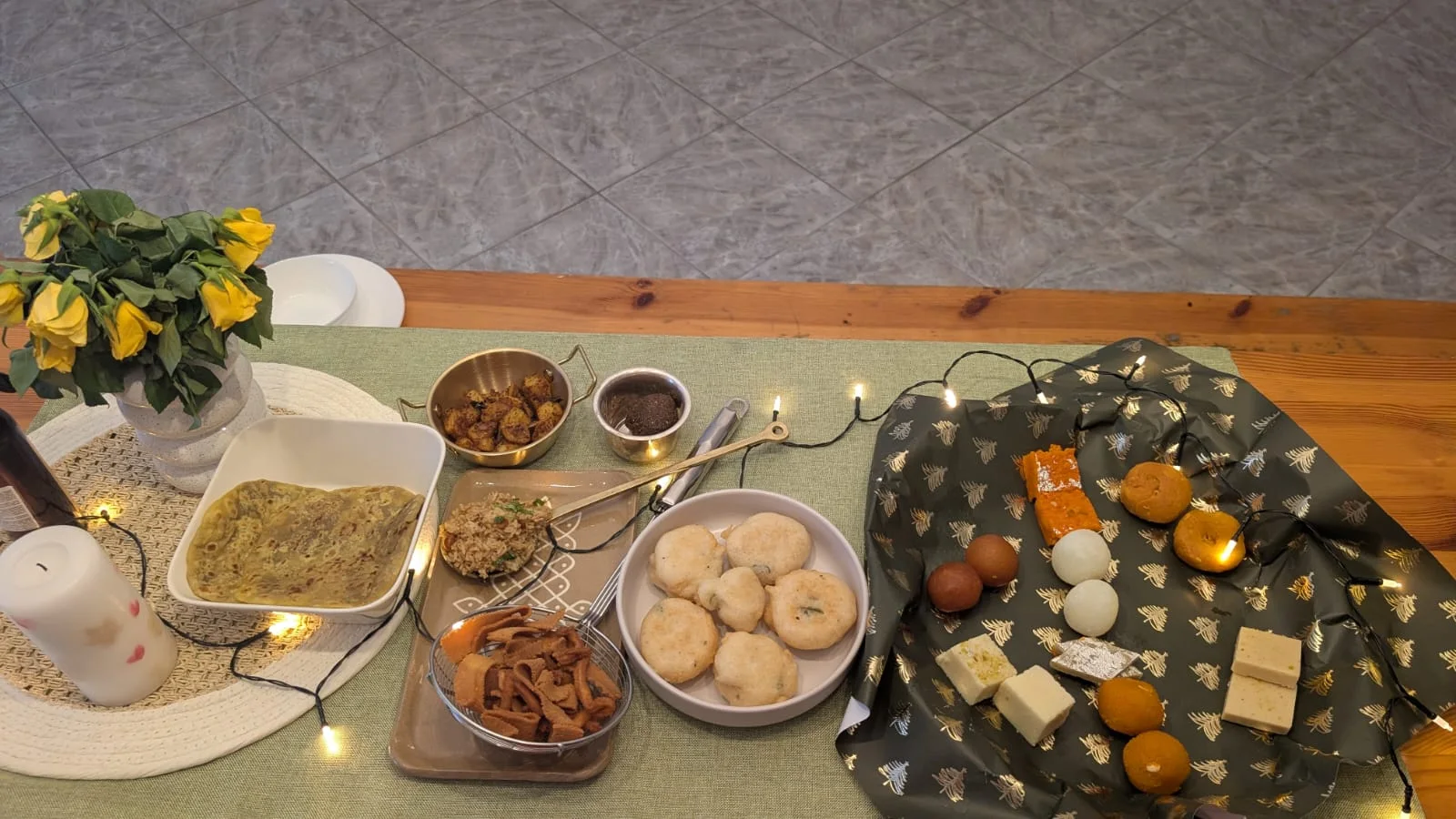
The ones with a written recipe, so you can cook them for your own table:
- Vellai Appam
the fried snack of my Deepavali mornings, from a rice and urad dal batter.
- Ribbon Pakoda
the part of the mixture I always reached for, pressed from rice flour and gram flour.
- Paruppu Poli
a thin flatbread around a chana dal and jaggery filling, cooked with ghee.
- Chettinad Urulai Roast
boiled potatoes tossed in a freshly ground pepper and fennel masala until the edges crisp.
- Deepavali Legiyam
the small spiced jaggery paste that closes the feast, from everyday kitchen spices.
- Homemade Ghee
the jar everything festive starts with.
What stays
When I think about Deepavali today, I remember more than the sweets, snacks or firecrackers. I remember the excitement of waking up before sunrise, the rituals we followed every year, the house filled with the aroma of Amma's cooking, and the joy of having the whole family together.
“Some aromas instantly take me back to my childhood kitchen. The smell of butter slowly turning into golden ghee is certainly one of them.”
Perhaps that is what makes these festivals so special. The food is wonderful, the traditions are meaningful, but it is the memories and the people we share them with that stay with us.