Issue 2
Inside the Anjarapetti
By Sandhya Ravichandran · 3 min read
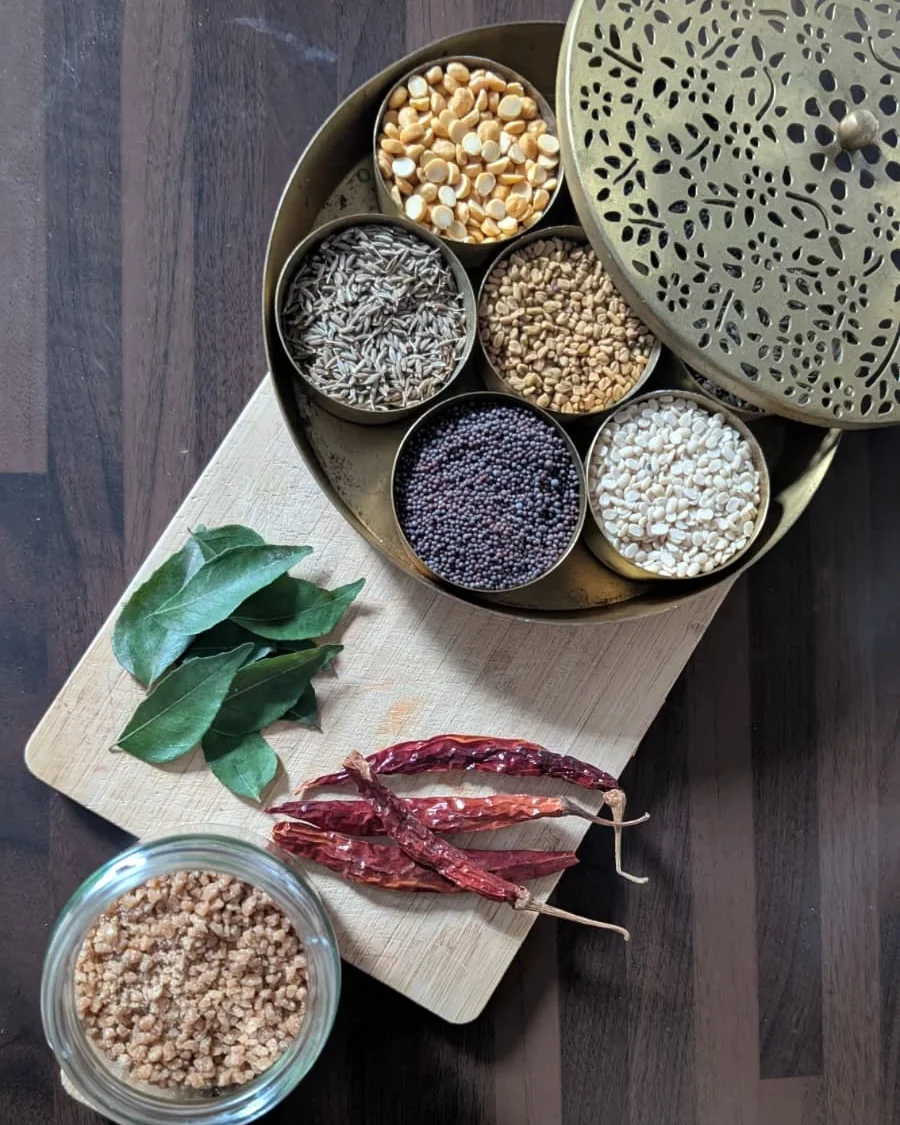
I would rather call this “Inside My Anjarapetti” 😉 because every kitchen has its own story.
The word Anjarapetti literally refers to a spice box with five compartments, although over the years many of us have come to use boxes with six or seven compartments depending on what we cook most often.
For me, it is simply a convenient home for the spices, seeds and lentils I reach for almost every day.
These ingredients often come together in thaalipu / tadka / tempering — one of the most familiar techniques in South Indian cooking. Not every dish is tempered in the same way, and not every ingredient is used each time, but each one can contribute something different: aroma, nuttiness, bitterness, texture or warmth.
The Big Five
- Mustard seeds
- One of the first ingredients that comes to mind when I think of tempering. Their popping sound is almost a signal that the cooking has begun.
- Cumin seeds
- Warm, earthy and aromatic. I use them in several everyday preparations where I want a softer spice note.
- Urad dal
- Apart from flavour, urad dal gives a lovely toasted nuttiness and a slight crunch when used in tempering.
- Chana dal
- Another ingredient I love for its nutty flavour and texture, especially when it turns golden in hot oil.
- Fenugreek seeds
- Used in much smaller quantities, but incredibly distinctive. A little can add depth and pleasant bitterness; too much can easily dominate.
And, of course, tempering does not stop with what is inside the box.
Curry leaves, dried red chillies and hing (asafoetida) are three ingredients I often reach for as well. They bring their own powerful aromas and can completely change the character of a dish.
And then there is the second box...
What can I say — one box is never quite enough.
I also keep another box with ingredients I use often for different kinds of dishes:
- Turmeric powder
- Chilli powder
- Coriander powder
- Byadagi chilli powder
- Black and white sesame seeds
- Cardamom
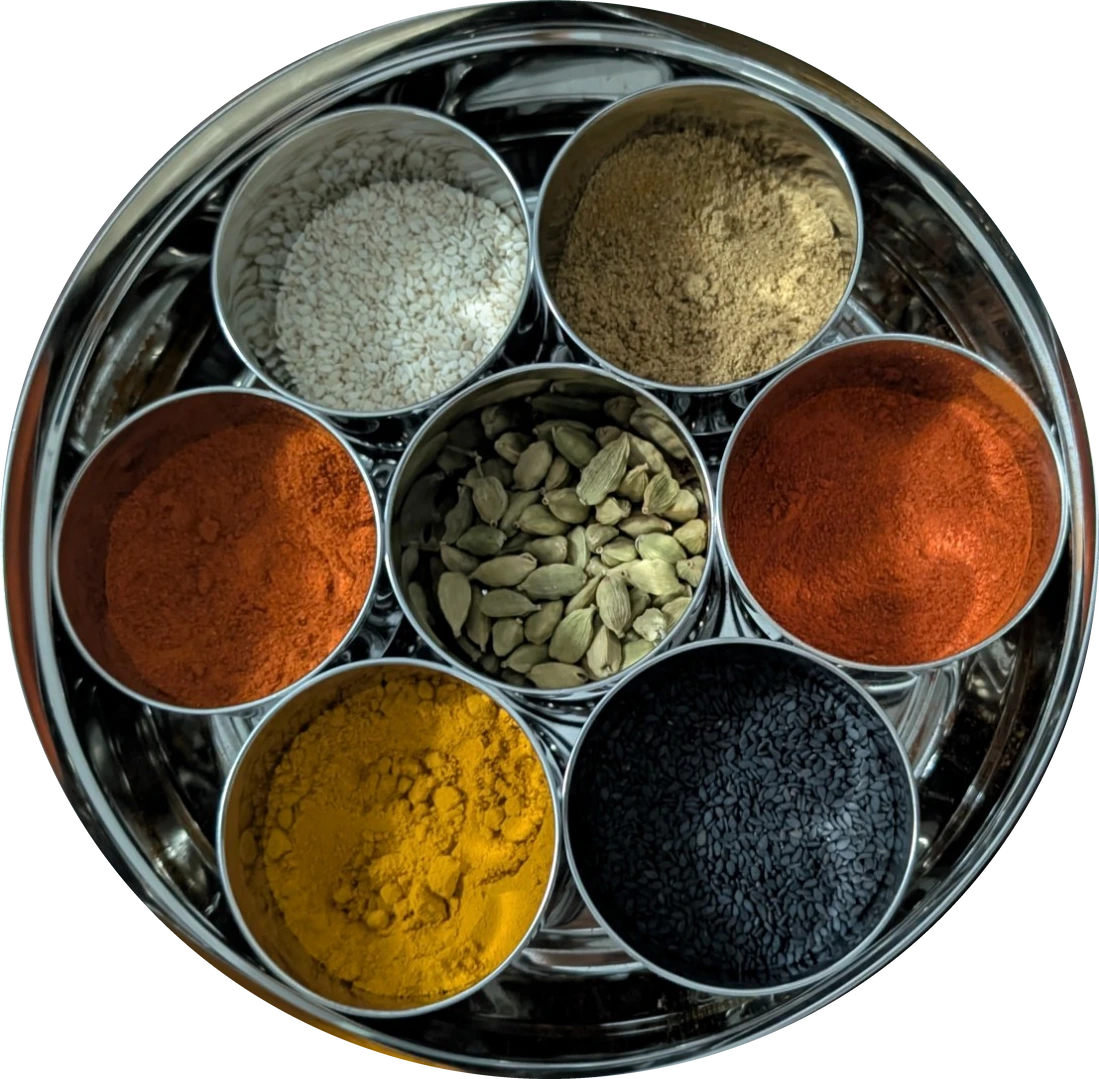
Sesame seeds may not technically be a masala, but they appear often enough in my cooking to deserve their own permanent place. I especially love the way their flavour changes when toasted, becoming deeper and nuttier.
Cardamom is something I reach for less frequently, but for certain sweets, festive dishes and aromatic preparations, it is indispensable.
More than just a spice box
What I like most about an Anjarapetti is that it quietly reflects the way a household cooks.
Someone else’s box may look completely different from mine — and that is exactly the point.
The ingredients we keep closest to hand say something about the dishes we make often, the flavours we grew up with, and the habits we carry into our own kitchens.
So this is not the Anjarapetti. It is my Anjarapetti.
And perhaps that little box tells more of my cooking story than I realised.