Tamarind and coconut gravy · Tamil Brahmin
Kathrikai Kondakadalai Pitlaiகத்திரிக்காய் கொண்டைக்கடலை பிட்லை
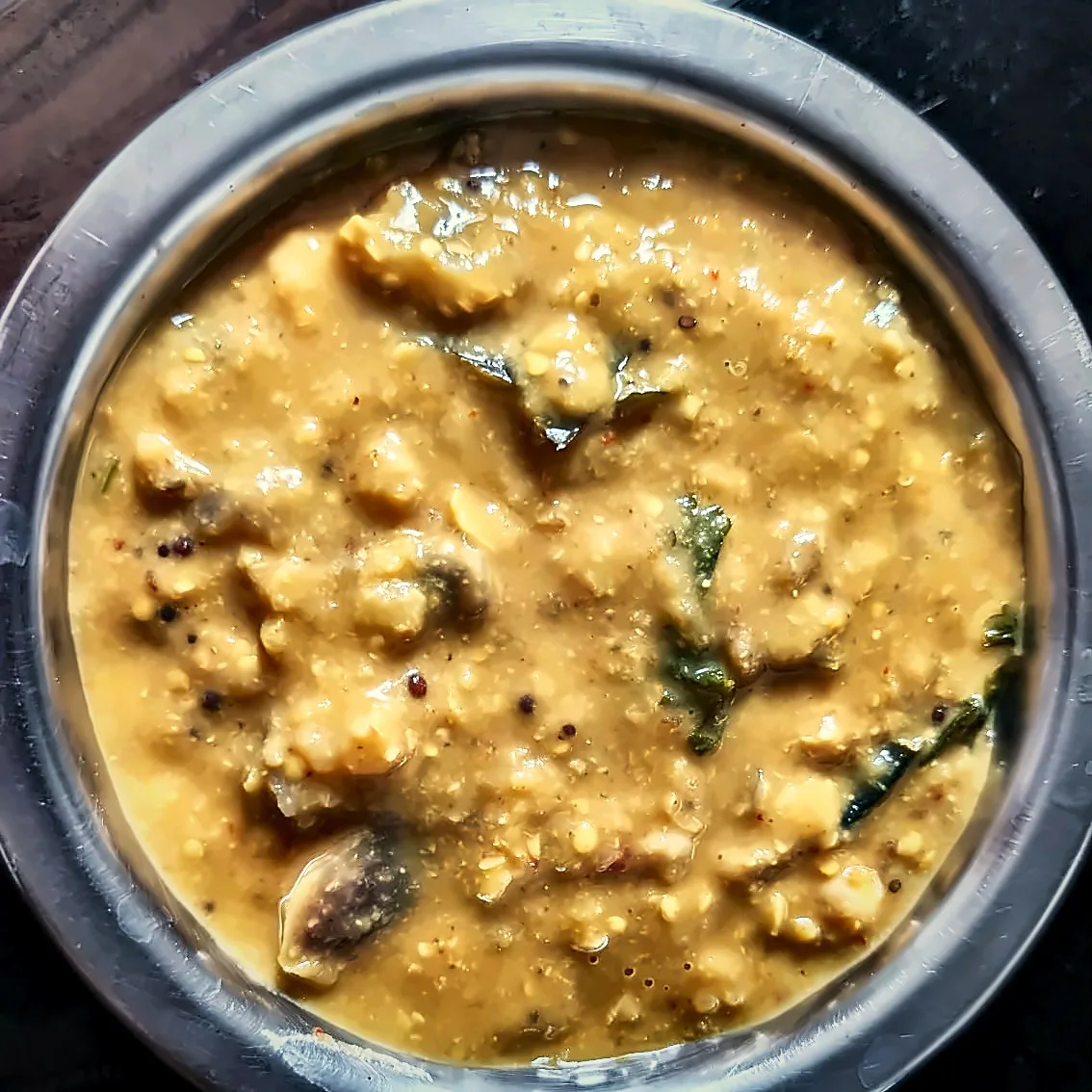
Kathrikai Kondakadalai Pitlai is my adapted version of a traditional Tamil Brahmin dish, often prepared for festive meals and special occasions. Like vathakuzhambu, it brings together a balance of tanginess, spice and richness. Tamarind provides acidity, chickpeas add body, brinjal absorbs the flavours, and coconut rounds everything off.
Traditionally, pitlai is often prepared with black chickpeas and bitter gourd. In this modified version, I use white chickpeas for their accessibility and brinjal for its ability to absorb the flavours of tamarind, roasted spices and coconut, while retaining the essence of the original dish.
Serves
- 4
Preparation
- 20 minutes
Cooking
- 25 to 30 minutes
Method
- 01
Soak the tamarind in warm water and extract about 2 cups of tamarind water.
- 02
Dry roast the coriander seeds, chana dal, urad dal and dried red chillies until aromatic. Add the coconut and roast briefly. Cool and grind to a smooth paste with a little water.
- 03
Cook the brinjal in the tamarind water with turmeric and salt until tender.
- 04
Add the cooked chickpeas and simmer for 5 minutes.
- 05
Stir in the ground coconut-spice paste. Add water if required to reach a thick, pourable consistency. Simmer gently for 8 to 10 minutes.
- 06
Heat sesame oil in a small pan and temper with the ingredients listed under For Tempering. Pour the tempering over the pitlai. Serve hot.
Kitchen tips
- Add water a little at a time after the coconut paste goes in. The pitlai should be thick but still pourable.
- While sesame oil is my usual choice, I occasionally reach for coconut oil instead. The result is not simply a different aroma, but a different flavour experience altogether. It is a small kitchen experiment that reinforces a question I keep returning to: how much does the choice of oil influence the way we perceive a dish?