Tamarind gravy · Tamil Nadu
Vathakuzhambuவத்தக்குழம்பு
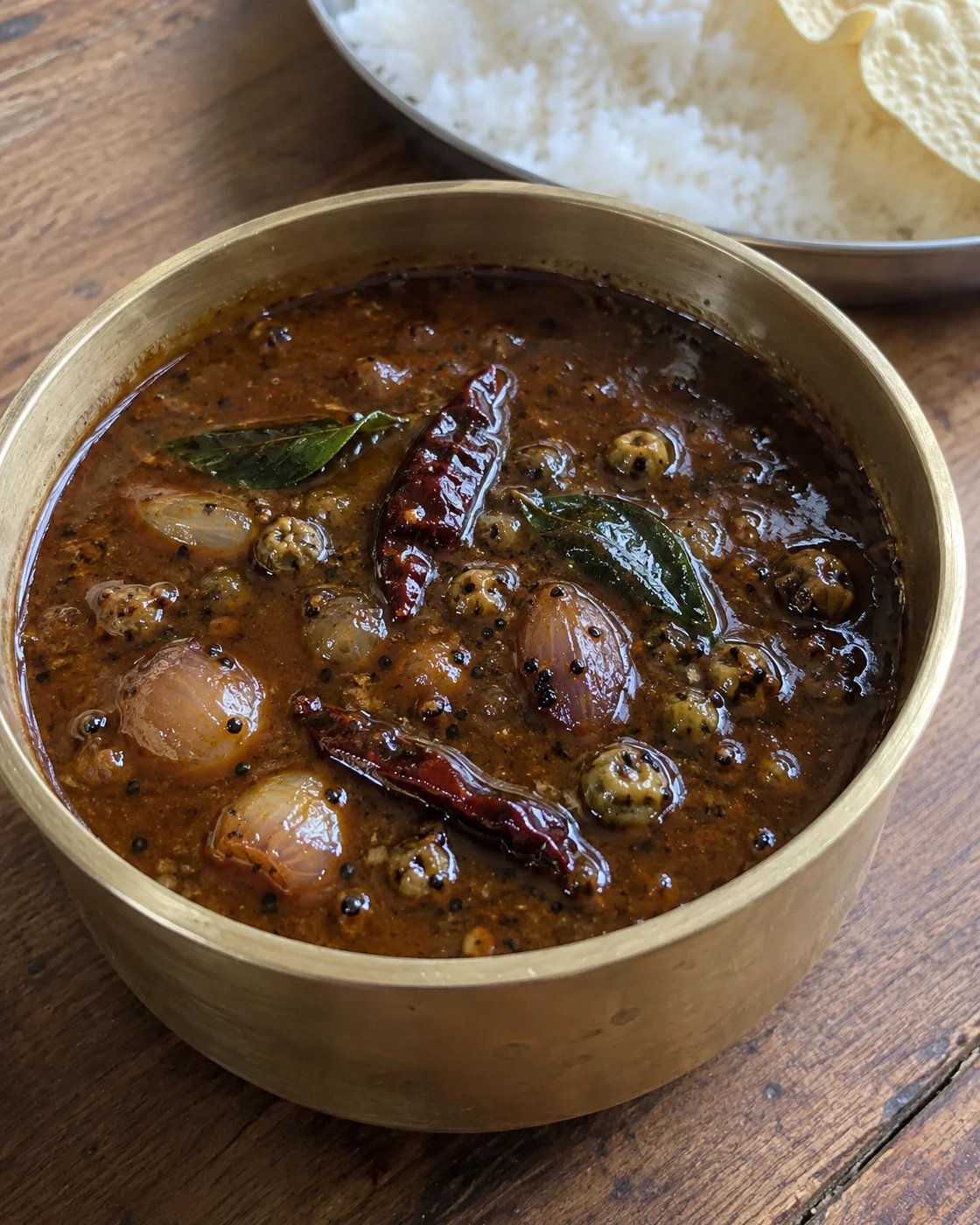
Vathakuzhambu is a much cherished food in South Indian homes and will be slurped in no time.
It is a tamarind-based gravy made traditionally with gingelly or sesame oil, and it is known for its longer shelf life.
In earlier times, people used to dry vegetables like sundakkai (turkey berry) or manathakkali (black nightshade berries). These dried vathal are used in the gravy and give it a very distinct flavour.
Apart from these, a spice powder is made which makes the dish lip-smacking.
Vathakuzhambu is paired with piping hot rice. Accompaniments could include appalam and any type of poriyal.
Serves
- 4
Preparation
- 20 minutes
Cooking
- 30 to 40 minutes
Method
- 01
Soak the tamarind in hot water for about 15 to 20 minutes. Squeeze it well and extract the tamarind water. You want roughly 2 to 2½ cups of fairly strong tamarind extract to begin with.
- 02
Heat the sesame oil in a kadai or heavy-bottomed pan over medium heat.
- 03
Add the mustard seeds and allow them to splutter. Add the fenugreek seeds and let them turn slightly golden and aromatic. Be careful not to darken them too much, as fenugreek can become bitter very quickly.
- 04
Add the curry leaves and asafoetida. Let them sizzle briefly.
- 05
Lower the heat slightly and add the vathal, or vegetables of your choice, followed by the sambar powder. Stir for only a few seconds so that the spices bloom in the oil without burning.
- 06
Pour in the tamarind extract carefully and add salt.
- 07
Bring the mixture to a boil, then reduce to medium-low heat and let it simmer uncovered for about 20 to 30 minutes.
- 08
If it becomes too thick, add a little hot water. If it is still watery, continue simmering until it reaches a thick, pourable consistency.
- 09
Let it rest for 15 to 30 minutes before serving if possible. The flavour usually becomes more rounded as it sits.
Kitchen tips
- It is ready when the raw tamarind smell has gone, the gravy has reduced visibly and a thin sheen of sesame oil appears on top. The flavour should be sour and spicy, but not harsh.
- Taste once the kuzhambu has reduced. If the sourness feels very sharp, add the optional ½ teaspoon of jaggery. It should not make the dish taste sweet, only round out the sourness and bitterness.
- Some households add rice flour to thicken the kuzhambu, but it is purely optional.
- Store tamarind in a ceramic jar. Tamarind is acidic and slowly reacts with metal, which gives it a metallic taste. Ceramic is inert, so the flavour stays clean.
Read more
Why does half a teaspoon of jaggery change this dish so much? Issue 1 looks at the six tastes and how a small adjustment rebalances a whole meal.