Issue 3
Beyond the Basics: A Peek Inside My Spice Box
By Sandhya Ravichandran · 3 min read
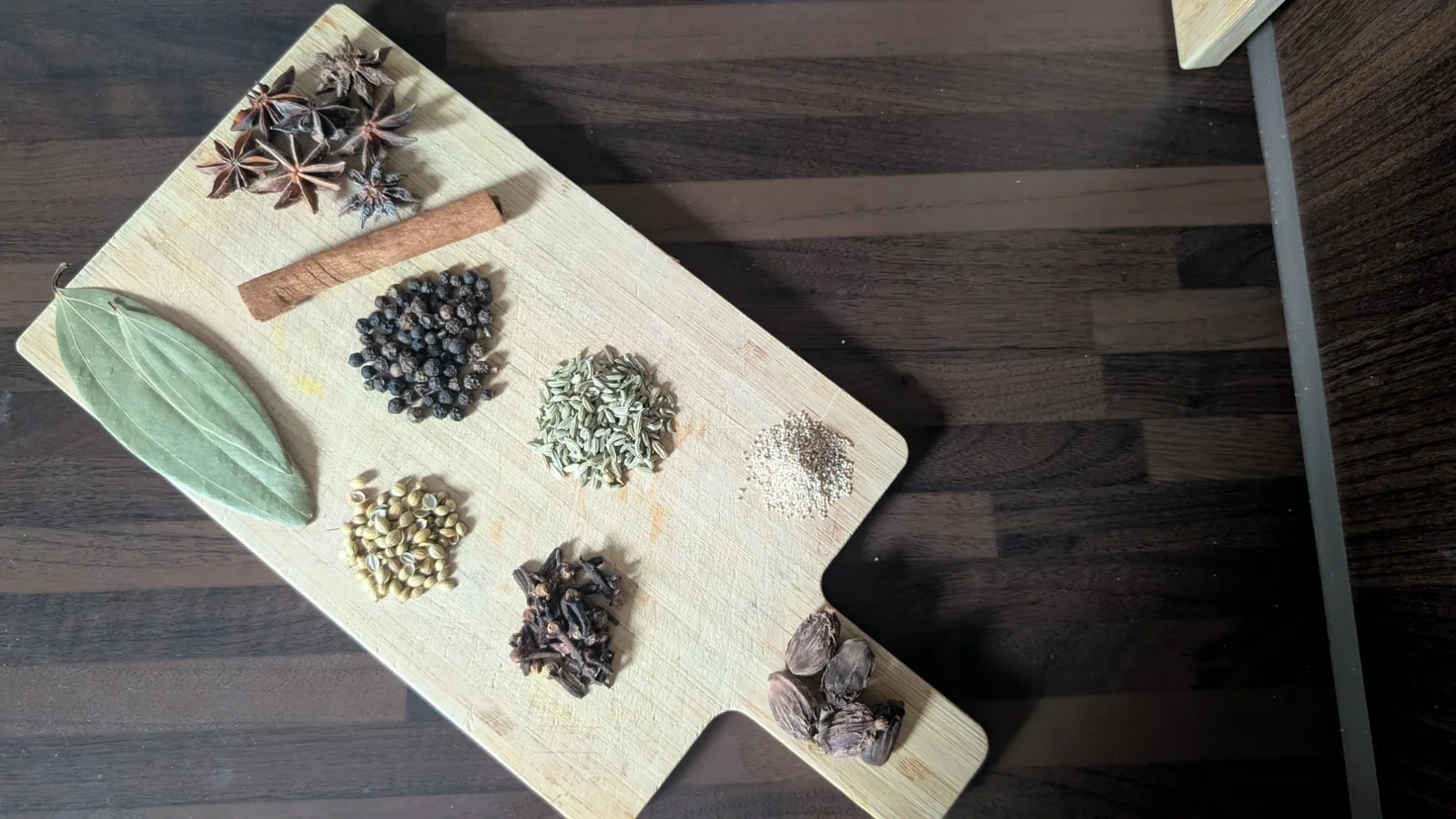
One box is never quite enough in an Indian kitchen 😛
Apart from my anjarapetti, I have another box filled with ingredients that I may not reach for every single day, but that I still would not want my kitchen to be without.
What I like about this second box is that it changes the mood of the cooking. The anjarapetti feels like everyday rhythm; this box feels more like depth, warmth and occasion.
Inside, you will usually find:
- Black pepper
- warm, sharp and deeply aromatic.
- Fennel seeds
- slightly sweet, fresh and very fragrant.
- Cinnamon sticks
- woody, warm and gently sweet.
- Coriander seeds
- warm, gently citrusy and slightly nutty.
- Cloves
- tiny, but incredibly powerful in aroma.
- Star anise
- sweet, liquorice-like and instantly recognisable.
- Bay leaves
- subtle, but useful for building background aroma.
- Poppy seeds
- mild and nutty, often used to bring body and texture to certain preparations.
- Black cardamom
- smoky, bold and completely different from the sweeter green cardamom we are more familiar with.
And then there are a few ingredients that sit elsewhere in my pantry but come out when a dish needs something a little special.
Saffron brings colour, aroma and a delicate floral character, especially to sweets and festive dishes.
Cashews are much more familiar in South Indian cooking than saffron. I use them in sweets, payasam, festive rice dishes and sometimes in savoury preparations where they add richness and texture.
What I find interesting about whole spices is that they never behave in exactly the same way.
Crushed pepper gives a very different effect from whole pepper simmered in a gravy. Fennel smells completely different after roasting. A cinnamon stick slowly infusing into a dish creates a softer aroma than ground cinnamon added directly.
And adding them to an oil has its own science surprisingly!
This is also why I find Chettinad cooking so fascinating. The cuisine shows beautifully how whole spices, freshly ground masalas and careful roasting can build flavour in layers rather than all at once.
Chettinad potato roast and vegetable kurma are two dishes I keep coming back to — easy enough for everyday cooking, but special enough to serve when I have people over 🙂