Issue 4
Oils I Reach For
By Sandhya Ravichandran · 3 min read
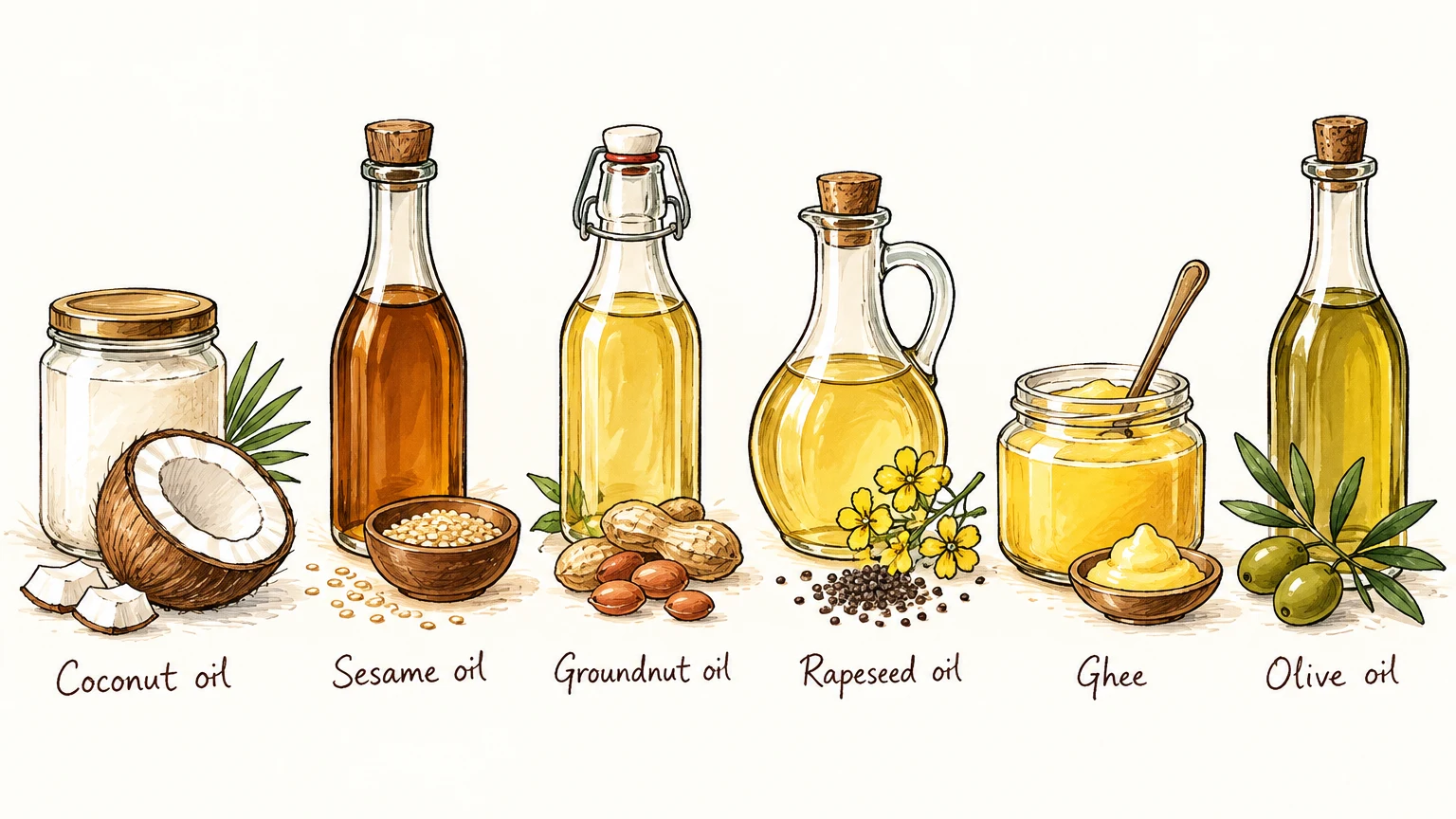
Just like my anjarapetti has five to seven compartments, I also have a small collection of oils that my hands automatically reach for whenever I start cooking — whether it is something quick or something that needs a little more time.
The oil I choose does not really depend on what happens to be available. It depends almost entirely on what I am going to cook.
For me, certain oils are closely connected to certain dishes. Sometimes it is because of the flavour, sometimes because that is simply how I grew up eating it, and sometimes because tradition has taught us that a particular oil belongs there.
Oil may often be almost invisible on the plate, but in some dishes, it quietly plays the main character.
The oils you will usually find in my cupboard are:
- Coconut oil
- distinctly aromatic, rich and very recognisable. It gives dishes a strong regional character and works especially well in Kerala-style cooking, stir-fries and dishes where you actually want to taste the oil itself.
- Sesame oil
- deep, nutty and slightly earthy. It has a bold flavour, so it becomes part of the dish rather than staying in the background. I especially associate it with kuzhambu, pickles and many Tamil-style preparations.
- Groundnut oil
- mild, slightly nutty and rounded. It works well for everyday cooking because it supports the spices without overpowering them, and it is very comfortable for frying, roasting and sautéing.
- Rapeseed oil
- much more neutral in flavour, especially in its refined form. I use it when I want the ingredients, spices and tempering to stand out more than the oil itself.
- Ghee
- technically not an oil, but clarified butterfat. It is rich, buttery and deeply aromatic, bringing warmth and a fuller mouthfeel. I especially associate it with pongal, sweets, festive dishes and finishing a dish just before serving.
And because my kitchen does not stop with South Indian cooking, you will also find a bottle of olive oil somewhere in there 😉.
What I find interesting is that each of these brings something completely different to the food — its own aroma, richness, mouthfeel and character.
And sometimes, changing just the oil can make a familiar dish feel like a completely different one.
So where does the oil really make a difference?
One of the clearest examples in my kitchen is Vathakuzhambu. For me, sesame oil is not optional here — its deep, nutty character becomes part of the flavour of the kuzhambu itself.
You can find my recipe here: Vathakuzhambu →